
Genicular Cooled Radiofrequency Ablation for Knee Pain in Pune: Advanced Non-Surgical Relief
Act 1: Setup - When Knee Pain Takes Over Your Life
Seventy-two-year-old Sharad Kulkarni from Pimpri had resigned himself to a life of limited mobility. His severe knee osteoarthritis had progressed to the point where even walking from his bedroom to the living room required careful planning and multiple rest stops.
"I can't play with my grandchildren anymore," he shared during his consultation at The Painex Clinic. "My daughter wants me to get knee replacement surgery, but I have diabetes and high blood pressure. The doctors said I'm high-risk for surgery."
For patients like Sharad across Pune - particularly elderly individuals with medical comorbidities - the choice often feels impossible: live with debilitating pain or undergo risky major surgery.
Research shows knee osteoarthritis affects 22.9% of individuals aged over 40 years globally
with many patients finding no satisfactory pain relief with conservative options. The impact on quality of life for Pune's aging population, especially in areas like Kothrud, Deccan, and PCMC, is substantial.
But there's a third option that many patients don't know exists: genicular cooled radiofrequency ablation.
Act 2: Conflict - Traditional Treatments Falling Short
The Conservative Treatment Trap
Most knee osteoarthritis patients in Pune follow a predictable pathway:
Step 1: Pain medications (NSAIDs, painkillers) Result: Temporary relief, but potential stomach issues, kidney problems, and need for increasing doses
Step 2: Physiotherapy and exercises Result: Helpful for some, but advanced osteoarthritis patients like Sharad often find exercises too painful to perform effectively.
Step 3: Intra-articular injections (steroids, hyaluronic acid) Result: Relief lasting weeks to months, requiring repeated injections
Step 4: Surgery recommendation Problem: Not everyone is a good surgical candidate; recovery is lengthy and demanding.
Sharad had tried all of these. His medicine cabinet was full of pain medications causing stomach upset. Steroid injections provided only 2-3 months of relief
Randomized controlled trials demonstrate genicular RFA superiority compared with intra-articular steroid, viscosupplementation, and oral analgesics
offering a more effective alternative.
Understanding What Makes His Knee Hurt
The pain in osteoarthritic knees isn't just from bone rubbing on bone. It's also from small sensory nerves called genicular nerves that surround the knee joint and carry pain signals to the brain.
Think of these nerves as telephone lines constantly sending "pain" messages to your brain. Even when you're sitting quietly, these nerves keep broadcasting discomfort signals, making every movement a reminder of your condition.
Traditional treatments try to reduce inflammation or provide cushioning, but they don't address these pain-signaling nerves directly. That's where genicular cooled radiofrequency ablation changes the game.
Act 3: Resolution - The Advanced Solution
What is Genicular Cooled Radiofrequency Ablation?
Genicular cooled RFA is an FDA-approved, minimally invasive procedure that uses controlled heat to interrupt pain signals from specific nerves around the knee joint. The "cooled" aspect refers to advanced technology that creates more precise and effective nerve lesions compared to traditional radiofrequency.
Cooled radiofrequency ablation therapy for genicular nerves shows increasing evidence supporting clinical effectiveness
in patients with chronic knee osteoarthritis.
How it works:
A specialized needle with a cooled tip delivers radiofrequency energy to the genicular nerves. The cooling technology allows for:
- Larger, more consistent lesion creation
- Better pain relief
- Longer-lasting results
- Greater precision and safety
The procedure doesn't remove arthritis or regrow cartilage. Instead, it "mutes" the pain signals so your brain doesn't receive constant distress messages from your knee.
Sharad's Procedure Day at The Painex Clinic
Pre-Procedure Preparation (Week Before)
First, we performed diagnostic genicular nerve blocks under ultrasound guidance. Using a fine needle, we injected small amounts of local anesthetic around three key nerves: superior medial, inferior medial, and superior lateral genicular nerves
"How much pain relief did you experience?" we asked him the next day.
"About 75% better," he reported. "I could walk around my house more easily than I have in months."
This positive response to diagnostic blocks helped predict he would benefit from the radiofrequency procedure.
Studies show patients with positive diagnostic blocks achieve better RFA outcomes, with the procedure providing significant pain relief when properly selected.
The Procedure Day
When Sharad arrived at our Nigdi facility for the actual RFA procedure:
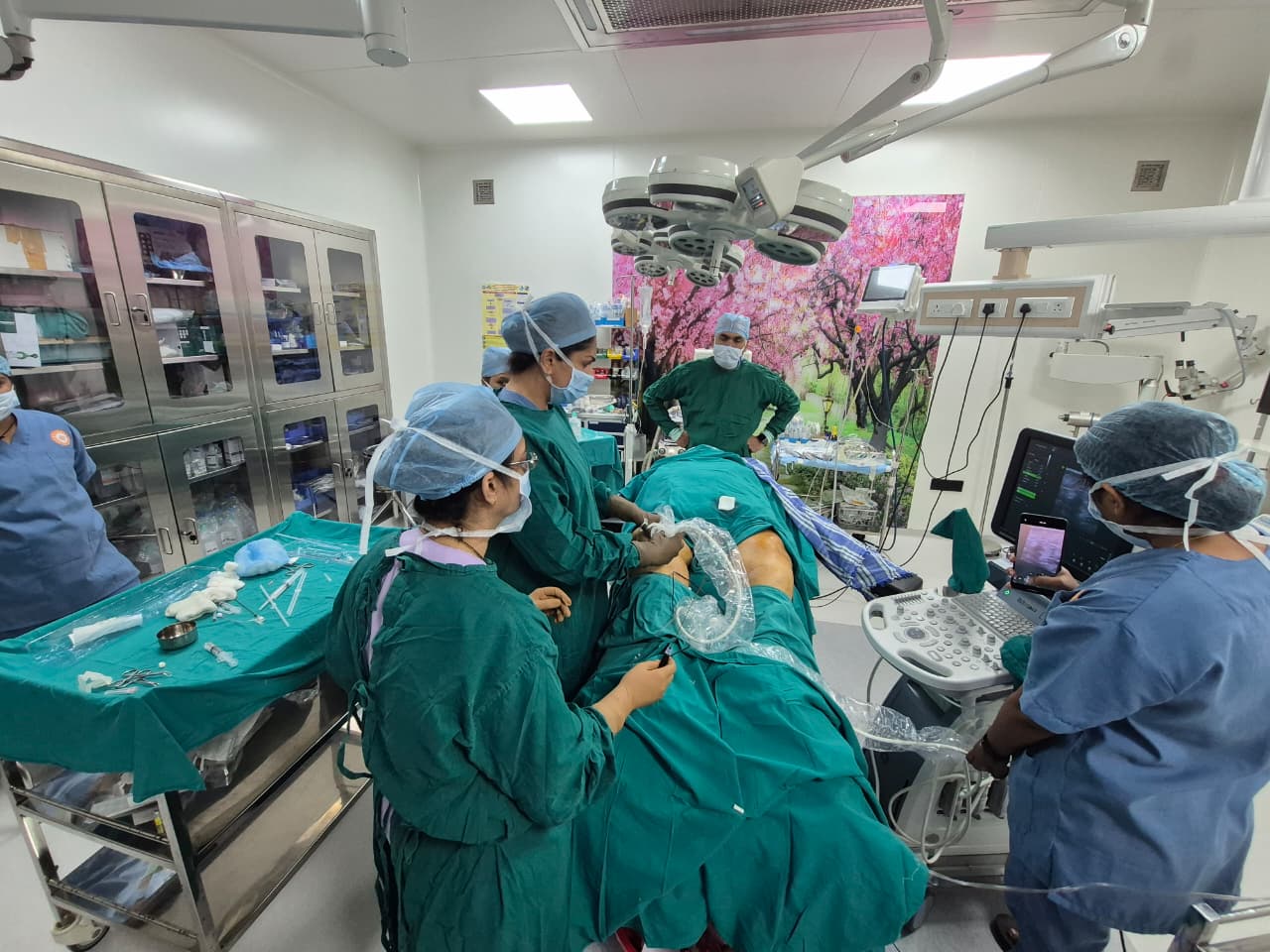
Step 1: Positioning and Preparation (10 minutes) He lay comfortably on the procedure table. The knee area was thoroughly cleaned and sterile drapes applied. Local anesthetic numbed the skin at three entry points.
Step 2: Image-Guided Needle Placement (15 minutes) Using live fluoroscopy (real-time X-ray), we precisely positioned specialized cooled RFA needles at the exact locations of the genicular nerves - where bone meets soft tissue at specific anatomical landmarks.
Step 3: Nerve Testing (10 minutes) Before ablation, we performed sensory testing to confirm correct placement. When Sharad reported feeling pressure matching his usual knee pain pattern, we knew we had accurately targeted the correct nerves.
Motor testing ensured no motor nerves would be affected - maintaining full knee function.
Step 4: The Ablation (15 minutes) Additional local anesthetic was injected for comfort. Then, cooled radiofrequency energy was applied at each of the three nerve locations for approximately 2.5 minutes per site.
"I feel some warmth and pressure, but it's not painful," Sharad reported.
Total procedure time: About 50 minutes. No incisions, no stitches, no hospital admission required.
The Transformation: Weeks Following Treatment
Week 1: Mild soreness at needle sites - similar to post-vaccination discomfort. Sharad continued his regular medications and used ice application as instructed.
Week 2-3: The real change began. "I'm walking to the bathroom at night without holding the wall," he told us during follow-up. His morning knee stiffness was noticeably reduced.
Month 1: Sharad's daughter called with excitement: "Dad walked to the neighborhood temple yesterday - something he hasn't done in over a year!"
His pain had reduced by approximately 70%. He was sleeping better, needing fewer pain medications, and regaining confidence in his movements.
Month 3: At his scheduled follow-up, the results spoke for themselves:
- Pain reduced from 8/10 to 2/10
- Walking 500+ meters comfortably
- Playing with grandchildren without constant wincing
- Minimal pain medication use
- Improved quality of life
Research demonstrates that at 6-month follow-up, cooled RFA provides significant osteoarthritic pain alleviation , with many patients experiencing sustained relief.
The Science Behind Success
Why does it work so well?
A double-blind, randomized, controlled study showed the successful responder rate was significantly higher in the cooled RFA group (76.5%) than in the sham group (33.3%), proving this isn't just a placebo effect.
The overall success rate (≥50% pain relief after RFA) was
80.82% at 3-month follow-up and 56.16% at 6-month follow-up
, with results comparable for both osteoarthritic and post-knee replacement pain.
The cooled technology creates a larger, more consistent ablation zone compared to traditional radiofrequency. This means:
- More complete nerve coverage
- Better pain relief
- Longer-lasting results (often 12+ months)
- Lower need for repeat procedures
Who Benefits from Genicular Cooled RFA?
Ideal candidates include:
- Patients with moderate to severe knee osteoarthritis
- Those who aren't good surgical candidates due to age, comorbidities, or high BMI
- Individuals who want to avoid or delay knee replacement
- Patients with failed knee replacements causing unexplained pain
- Anyone with inadequate relief from conservative treatments
Best results seen in:
- Patients with positive response to diagnostic nerve blocks
- Those with knee pain as primary complaint (not severe mechanical issues)
- Individuals committed to post-procedure physiotherapy
- Patients with realistic expectations about outcomes
Research indicates the effect is better when pre-treatment pain is relatively less severe, knee effusion is not severe, and there are no severe middle or posterior knee pathologies, helping physicians select appropriate candidates. Research indicates the effect is better when pre-treatment pain is relatively less severe, knee effusion is not severe, and there are no severe middle or posterior knee pathologies .
Beyond Pain Relief: The Complete Care Approach
At The Painex Clinic, genicular cooled RFA is part of comprehensive knee pain management:
Pre-Procedure Assessment:
- Detailed physical examination
- X-ray or MRI review
- Medical history evaluation
- Discussion of realistic expectations
- Diagnostic nerve blocks
The Procedure:
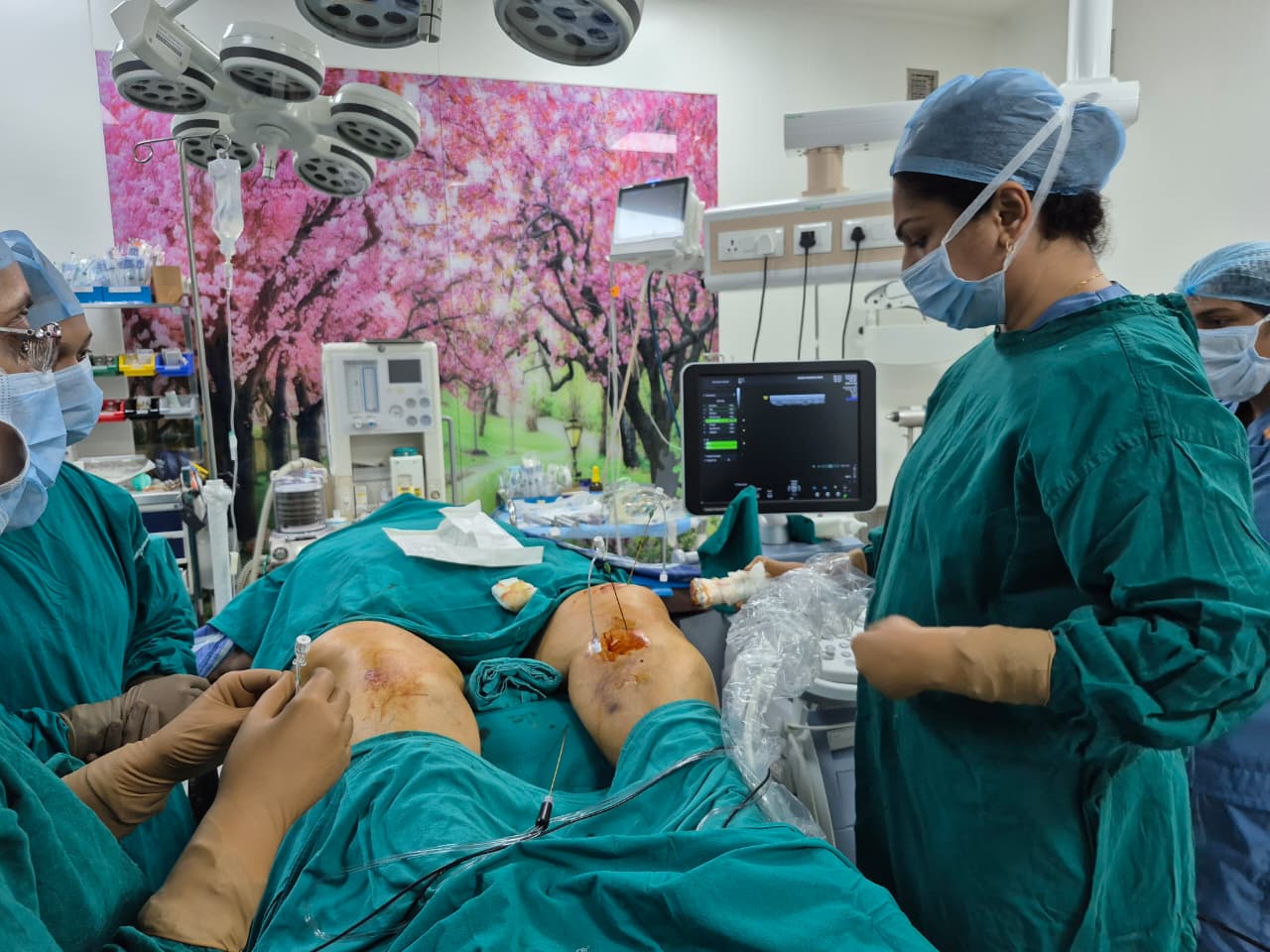
- Performed under ultrasound or fluoroscopy guidance
- Local anesthesia only - no general anesthesia needed
- Same-day discharge
- Minimal recovery time
Post-Procedure Care:
- Follow-up at 2 weeks, 1 month, and 3 months
- Customized physiotherapy program
- Activity modification guidance
- Weight management counseling when appropriate
Comparing Cooled RFA to Other Options
Cooled RFA vs Traditional RFA:
- Cooled creates larger, more consistent lesions
- Better long-term outcomes
- More predictable pain relief
Cooled RFA vs Knee Replacement:
- No surgery, no hospitalization
- Immediate return to daily activities
- Preserves natural joint
- Repeatable when needed
- Suitable for high-risk surgical patients
Cooled RFA vs Repeated Steroid Injections:
- Single procedure vs multiple injections
- Longer relief duration (12+ months vs 2-3 months)
- No concerns about steroid side effects
- More cost-effective long-term
Safety and Side Effects
Genicular RFA appears relatively safe based on available data
, with minimal reported complications in most studies.
Common minor side effects:
- Temporary soreness at needle sites (2-3 days)
- Mild swelling around the knee (1 week)
- Numbness in small areas near treatment sites (usually temporary)
- Slight increase in pain immediately after (rare, resolves in days)
Serious complications are extremely rare when performed by trained specialists under proper image guidance.
Frequently Asked Questions
How long does relief last? Most patients experience significant relief for 9-12 months, with many reporting benefits extending beyond a year. The procedure can be safely repeated when pain returns.
Can I still have knee replacement later if needed? Yes, absolutely. Genicular RFA doesn't burn bridges.
Studies show total knee arthroplasty after genicular nerve RFA shows reduction in prolonged opioid use without increased postsurgical complications
.
Is it painful? The procedure uses local anesthesia, so discomfort is minimal. Most patients describe pressure rather than pain.
When can I return to normal activities? Most patients resume normal daily activities within 2-3 days. Strenuous activities may be avoided for 1 week.
Will it affect my ability to walk or move my knee? No. Genicular nerves are sensory only. The procedure doesn't affect motor function, strength, or range of motion.
Location and Contact
The Painex Clinic Nigdi | Non-Surgical & Most-Advanced Pain Management Clinic in PCMC
Gandhi Nursing Home, Dattatray Krushnaji, Plot 102, Bhosale Road, Sector No. 24, Pradhikaran, Nigdi, Pimpri-Chinchwad, Maharashtra 411044
We serve patients from across Pune including Pimpri, Chinchwad, Wakad, Hinjewadi, Kothrud, Aundh, Baner, and surrounding areas.
Find Us:
Google Maps
Website: thepainexclinic.com
Your Path Forward
Like Sharad, you don't have to choose between living with severe knee pain or undergoing risky surgery. Genicular cooled radiofrequency ablation offers a middle path - an effective, safe, minimally invasive option that can restore quality of life without the risks and recovery demands of major surgery.
Whether you're not a good surgical candidate due to medical conditions, want to delay knee replacement, or have already had knee replacement surgery with persistent pain, genicular cooled RFA may be the solution you've been seeking.
Don't let knee osteoarthritis control your life. Contact The Painex Clinic today to schedule a consultation and discover if genicular cooled RFA is right for you.
Scientific References:
PubMed: Genicular Nerve RFA Effect Review
PubMed: Effectiveness of RFA for Genicular Nerves
PubMed: Cooled vs Pulsed RFA Systematic Review
PMC: Genicular RFA Technique Guide
PubMed: Genicular RFA Current Evidence
PubMed: OA vs Post-TKA Pain Effectiveness
PubMed: Double-Blind RCT of Cooled RFA
PMC: Outcome and Predictors Study